You’ve probably used one without thinking about it. You walk up to a washbasin, place your hands under the tap, and water starts flowing instantly. No twisting knobs, no touching handles. Just water when you need it. But if you pause for a second, the question naturally comes up: how do sensor taps work?
The technology behind how a sensor tap works is actually a neat combination of sensors, electronics, and smart plumbing. At Novatech Automatic Systems, this kind of touchless washroom technology is exactly what we focus on. Let’s talk about it!
Table of Contents
ToggleHow Do Sensor Taps Work? (Step-by-Step Process)
Understanding how do sensor taps work becomes easy when you look at the simple process behind them:
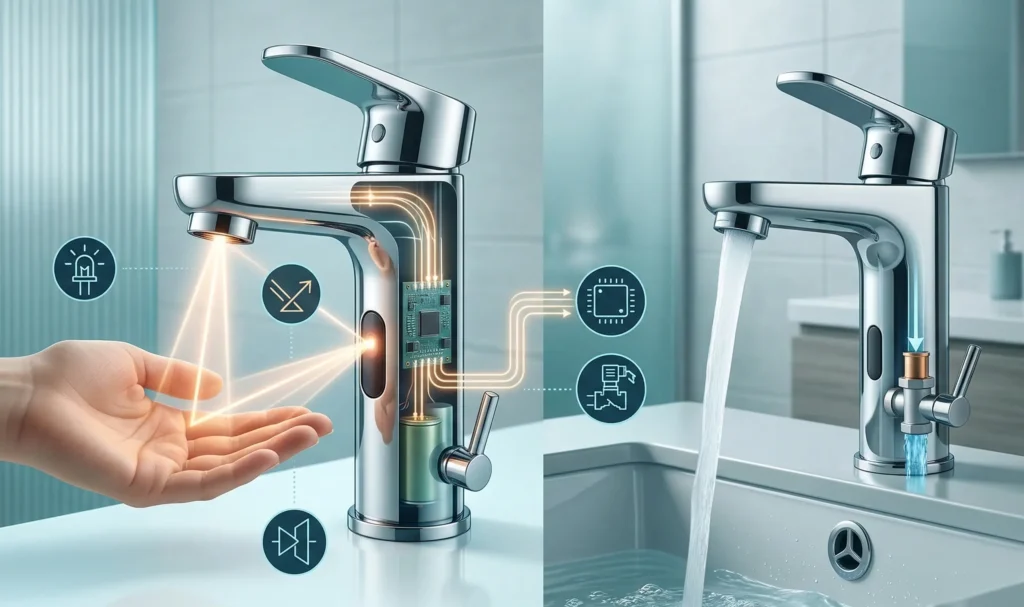
Step 1: The Sensor Detects Your Hands
A small infrared sensor near the tap scans the area. When you place your hands under the tap, the sensor detects the movement.
Step 2: The Sensor Sends a Signal
Now, once your hands are detected, the sensor sends an electronic signal to the control unit inside the tap. This is an important part of how automatic tap sensor works.
Step 3: The Valve Opens and Water Flows
This control unit then activates a solenoid valve that is connected to the water supply. The valve simply opens, and water starts flowing.
Step 4: Water Stops Automatically
At last, when you remove your hands, the sensor no longer detects the movement. So the valve closes immediately, stopping the water flow.
Quick Summary: How Sensor Taps Work
| Step | What Happens |
| Detection | The sensor detects your hands |
| Signal | The sensor sends signal to the control unit |
| Activation | Valve opens and water flows |
| Shutoff | Water stops when hands move away |
If you really want to understand how automatic tap sensor works, you should know about the main parts inside the system:
| Component | What It Does |
| Infrared Sensor | Detects hand movement |
| Control Unit | Processes signals |
| Solenoid Valve | Controls water flow |
| Power Source | Battery or electric supply |
| Faucet Body | Delivers water |
Each component plays a role in how the sensor water tap works.
For example:
- The sensor detects movement
- The control unit processes information
- The valve releases water
| Small Tip: If a sensor tap ever seems slow to respond, the issue is usually simple:a low battery dirt on the sensor Incorrect installation angle Once you know how a sensor tap works, it will make these problems easier to diagnose for you! |
Also Read: Top 10 Modern Bathroom Water Tap Designs
Sensor Tap vs Traditional Tap
We are here to prove that sensor taps have become popular for a reason. When you compare them to traditional taps, you will start to see the benefits clearly!
| Feature | Sensor Tap | Traditional Tap |
How it works | Uses an infrared sensor to detect your hands and release water automatically. This is essentially how sensor tap works in modern washrooms. | You manually turn a handle or knob to start and stop water flow. |
Hygiene | Very hygienic because no one needs to touch the tap. This reduces the spread of germs in shared spaces. | Less hygienic since many people touch the same handles throughout the day. |
Water usage | Water flows only when hands are present. That’s the practical advantage of how sensor water taps work. | Water can easily be left running if someone forgets to turn the tap off. |
| Ease of use | Extremely simple — just place your hands under the tap, and it activates automatically. | Requires turning the tap on and off every time. |
| Ideal places | Airports, offices, malls, hospitals, restaurants, and other high-traffic spaces. | Commonly used in homes or older buildings. |
Water wastage | Very low because the water shuts off automatically. Many businesses explore how do sensor taps work when they want to reduce wastage. | Higher chances of wastage due to human error. |
Maintenance | May require battery replacement or occasional servicing of the sensor system. | Generally, simple maintenance since there are fewer electronic parts. |
Overall experience | Modern, touch-free, and convenient. Often installed as part of automated washroom systems by companies like Novatech. | Functional and familiar,r but lacks automation. |
We want you to think about a public washroom where hundreds of people use the same tap handles every day. Well, that’s one reason businesses start exploring how sensor taps work as they want to reduce contact surfaces!
Also Read: Top 10 Different Types of Taps You Should Know!
Advantages of Sensor Taps
Once you understand how an automatic tap sensor works, the advantages become very obvious.
- Sensor taps remove the need to touch handles, which reduces the spread of germs. This is one of the top reasons why hospitals, airports, and restaurants rely heavily on them.
- With these smart taps, water flows only when hands are present. One of the biggest benefits of how sensor water tap works is that it prevents taps from being accidentally left on. Plus, you get to save on water!
- Another benefit is that it just feels easier to use. Your hands are already under the tap while washing them, so automatic activation removes an extra step.
- Lastly, sensor taps also change how a washroom feels. They instantly make a space look more modern and better maintained.
Where Sensor Taps Are Commonly Installed
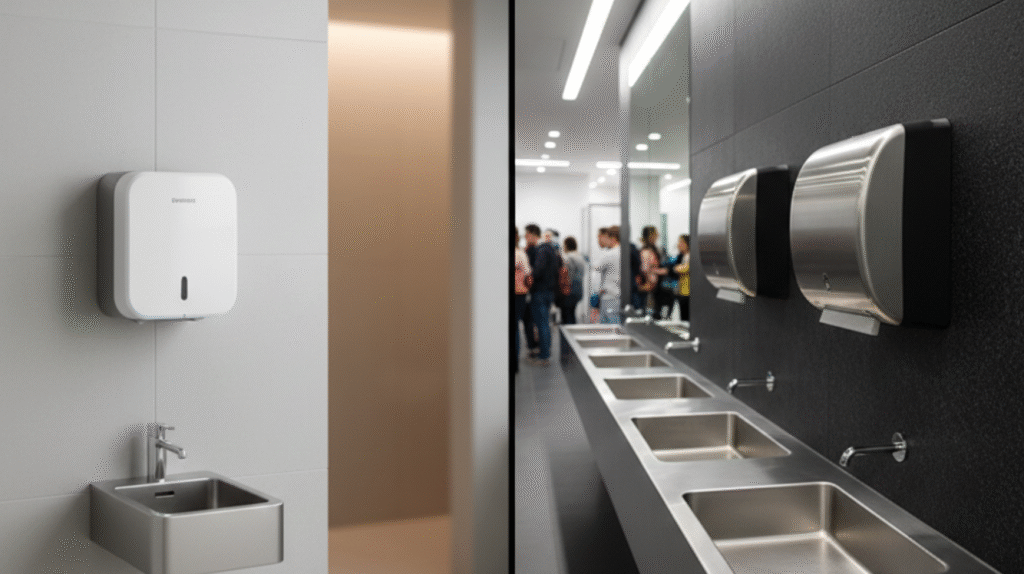
Now that you know how sensor taps work, we are sure you will start noticing them everywhere. They are especially common in places where many people use the same facilities:
| Location | Why They Use Sensor Taps |
| Airports | High hygiene standards |
| Hospitals | Infection control |
| Offices | Modern facilities |
| Restaurants | Clean handwashing |
| Shopping malls | Heavy daily usage |
At Novatech Automatic Systems, we actually help you build a reliable washroom that is designed for these environments.
Final Thoughts
Sensor taps might seem like a small upgrade, but they actually represent a smart shift in how modern washrooms are designed. And once you know all you need to know about how do sensor taps work, it becomes very clear why exactly they are becoming the standard in commercial spaces.
There is hygiene, reduced water waste, and they basically make everyday handwashing much easier. Our goal is simple as well: we want you to create smarter, cleaner washrooms with the help of reliable automation technology. And yes, sensor taps are often the first step towards that future!
Frequently Asked Questions
- How does a sensor water tap work?
If you want to understand how a sensor water tap works, remember this basic process: An infrared sensor detects your hands and sends a signal to a control unit. The unit activates a valve that releases water. When your hands move away, the valve closes automatically. That’s it!
- Do sensor taps save water?
Yes, big time! It is because the water flows only when the hands are detected, sensor taps definitely reduce the water usage. If you ask us, this is one of the key advantages of how automatic tap sensors work.
- Are sensor taps good for commercial washrooms?
Yes, they are widely used in offices, airports, malls, and hospitals. Once businesses understand how a sensor tap works, they often install them to improve hygiene and efficiency.
- Can sensor taps work without electricity?
While some sensor taps run on batteries, others use direct power. Either way, the basic principle of how sensor tap works remains the same.
- How does a sensor tap work without touching it?
The touchless operation is possible, thanks to the infrared detection. Basically, the tap senses the presence of your hands and activates the water flow automatically.
How useful was this post?
Click on a star to rate it!
Average rating 4.2 / 5. Vote count: 1546
No votes so far! Be the first to rate this post.